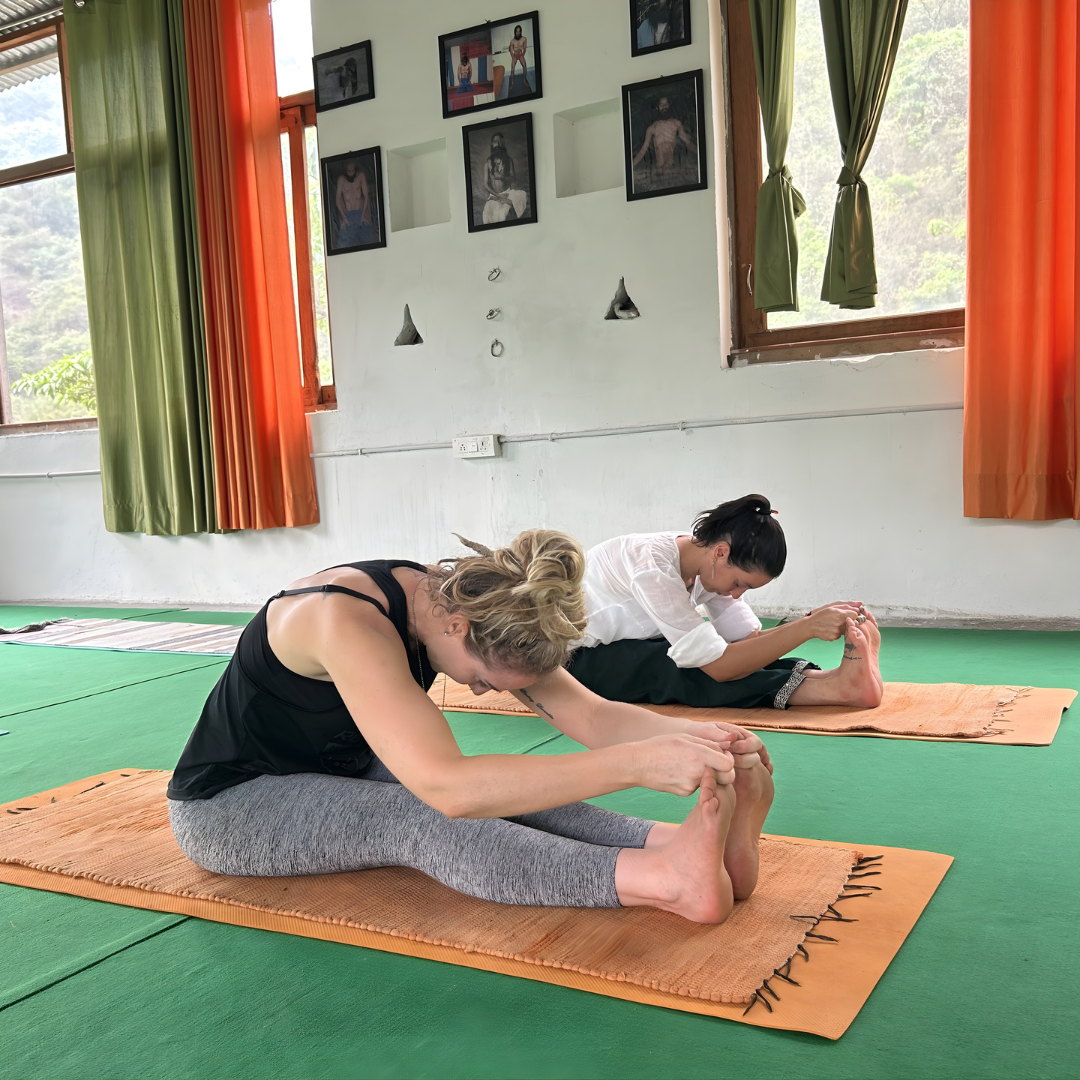
"I need a retreat" has become the default thing people say when they're fried. Half the time it's a joke. But it turns out the joke has some real science behind it. Stepping away for a few days of dedicated yoga practice does something measurable to your body, not just your mood.
Take cortisol, the hormone your body pumps out when it's stressed. In chronically overwhelmed people, cortisol doesn't just run high, it stops following its normal daily rhythm, staying elevated when it should be tapering off.
Researchers followed 38 people through a three-month yoga and meditation retreat and tracked exactly this pattern. By the end, participants' cortisol rhythms had shifted, their self-reported anxiety and depression had dropped, and something else jumped out: their levels of BDNF, a protein linked to brain health and neuroplasticity, had nearly tripled.
Take cortisol, the hormone your body pumps out when it's stressed. In chronically overwhelmed people, cortisol doesn't just run high, it stops following its normal daily rhythm, staying elevated when it should be tapering off.
Researchers followed 38 people through a three-month yoga and meditation retreat and tracked exactly this pattern. By the end, participants' cortisol rhythms had shifted, their self-reported anxiety and depression had dropped, and something else jumped out: their levels of BDNF, a protein linked to brain health and neuroplasticity, had nearly tripled.
You can read the full study here: https://www.ncbi.nlm.nih.gov/pmc/articles/PMC5483482/
And you don't need three months away to see something similar. Harvard Health has written about a separate 12-week program, 90 minutes of yoga a day, five days a week, that produced lower cortisol, less inflammation, and higher BDNF, too. Not a weekend fix, but far more attainable than a season-long retreat: https://www.health.harvard.edu/blog/yoga-could-slow-the-harmful-effects-of-stress-and-inflammation-201710191445
And you don't need three months away to see something similar. Harvard Health has written about a separate 12-week program, 90 minutes of yoga a day, five days a week, that produced lower cortisol, less inflammation, and higher BDNF, too. Not a weekend fix, but far more attainable than a season-long retreat: https://www.health.harvard.edu/blog/yoga-could-slow-the-harmful-effects-of-stress-and-inflammation-201710191445
There's an inflammation piece here worth mentioning, since it doesn't get talked about as much as stress. Low-grade, chronic inflammation is quietly linked to things like heart disease and depression. In that same three-month retreat study, researchers found the anti-inflammatory marker IL-10 went up while the pro-inflammatory marker IL-12 went down, a sign the practice was doing something at a cellular level, not just a mental one.
This isn't only relevant if you're already the type of person with room in your life for wellness trips, either. One study looked at family caregivers of Alzheimer's patients, a group that tends to carry a heavy emotional and physical load and invited them into an 8-week yoga and compassion meditation program. Compared to people who didn't do the program, participants saw real drops in stress, anxiety, depression, and morning cortisol. That matters, because it suggests the benefits aren't reserved for people with easy, low-stress lives to begin with: https://www.ncbi.nlm.nih.gov/pmc/articles/PMC3652205/
So why does the retreat format specifically seem to help, beyond just "doing yoga more"? Probably because it combines two things that are genuinely hard to get at home: full immersion and actual removal from your normal life. No inbox, no errands, no half-distracted practice squeezed in before work. The research suggests that kind of total break tends to produce bigger, faster physiological shifts than the same amount of yoga done in stolen moments between obligations.
If you're weighing whether a retreat is worth it, the honest answer from the research is: even a shorter, structured one seems to help, as long as it combines movement, breathwork, and quiet sitting practice, the same mix researchers have actually studied. You don't need the full three months to get something real out of it.
None of this is just "vacation feels good" logic. Lower stress hormones, calmer inflammatory markers, better brain-health signals, these show up in blood work, not just in how relaxed you feel walking out the door. Whether you can give it three days or three months, your body is very likely to notice.
If this has you thinking about giving your body that kind of reset, you can browse upcoming retreat dates and details at Lotus Yoga Academy and find one that fits where you're at.
This isn't only relevant if you're already the type of person with room in your life for wellness trips, either. One study looked at family caregivers of Alzheimer's patients, a group that tends to carry a heavy emotional and physical load and invited them into an 8-week yoga and compassion meditation program. Compared to people who didn't do the program, participants saw real drops in stress, anxiety, depression, and morning cortisol. That matters, because it suggests the benefits aren't reserved for people with easy, low-stress lives to begin with: https://www.ncbi.nlm.nih.gov/pmc/articles/PMC3652205/
So why does the retreat format specifically seem to help, beyond just "doing yoga more"? Probably because it combines two things that are genuinely hard to get at home: full immersion and actual removal from your normal life. No inbox, no errands, no half-distracted practice squeezed in before work. The research suggests that kind of total break tends to produce bigger, faster physiological shifts than the same amount of yoga done in stolen moments between obligations.
If you're weighing whether a retreat is worth it, the honest answer from the research is: even a shorter, structured one seems to help, as long as it combines movement, breathwork, and quiet sitting practice, the same mix researchers have actually studied. You don't need the full three months to get something real out of it.
None of this is just "vacation feels good" logic. Lower stress hormones, calmer inflammatory markers, better brain-health signals, these show up in blood work, not just in how relaxed you feel walking out the door. Whether you can give it three days or three months, your body is very likely to notice.
If this has you thinking about giving your body that kind of reset, you can browse upcoming retreat dates and details at Lotus Yoga Academy and find one that fits where you're at.